ServicesTree Trimming and Removal
Tree Trimming and Removal in Lake Buena Vista
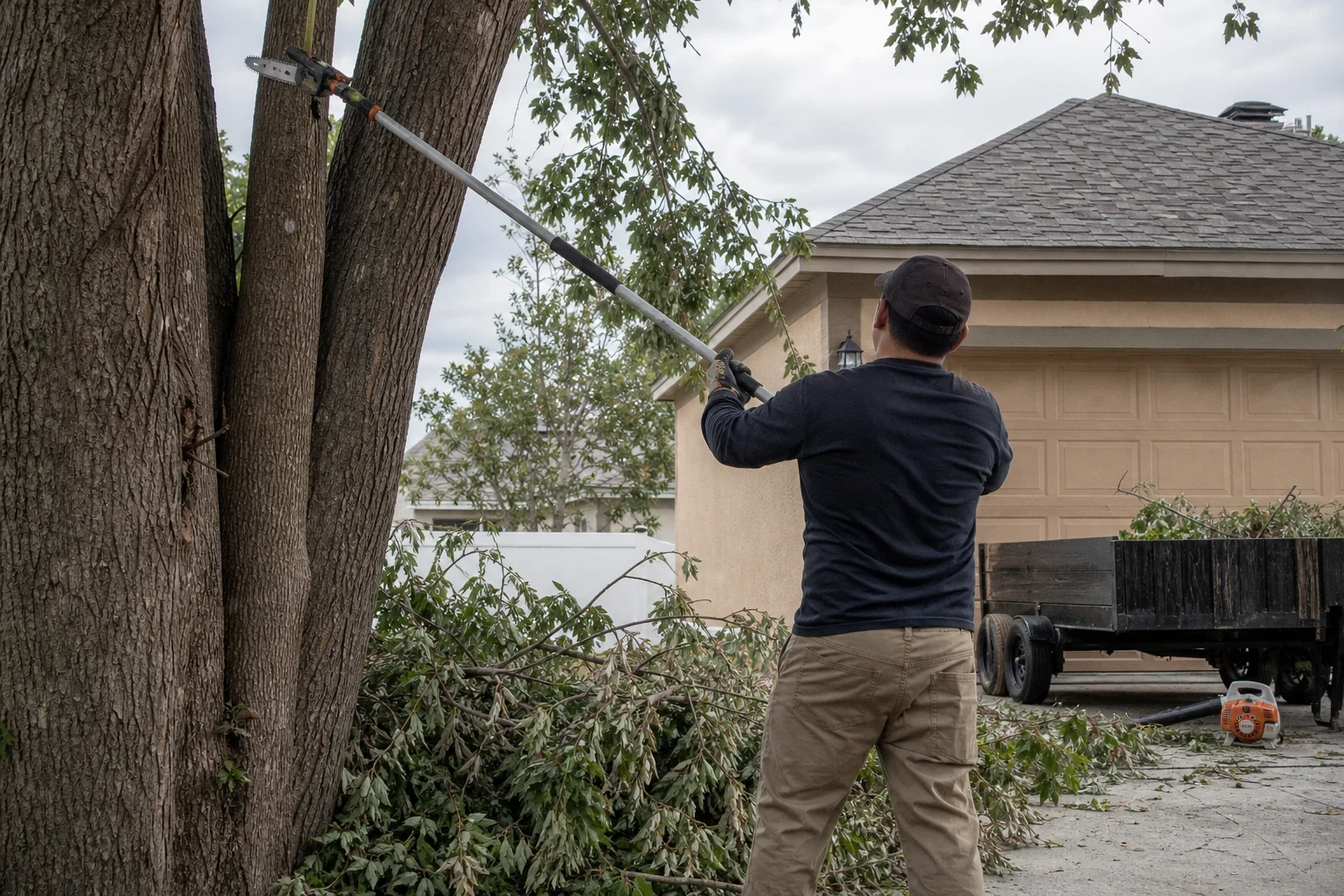
We prune trees to keep limbs off your roof and out of storm wind, and we remove trees that are dead, decayed or simply in the wrong place. Before we cut, we tell you whether a permit or HOA approval applies and handle the paperwork side with you.
Pruning or removal: how we decide
Most trees around your home need pruning, not removal. Good pruning takes out dead, crossing and weakly attached limbs, lifts the canopy off the roof and driveway, and thins the crown so wind passes through instead of loading it like a sail. We cut at the branch collar, the swollen ring where a limb meets the trunk, so the wound can seal over instead of rotting back into the tree.
Removal makes sense when the trunk or root plate is compromised: a hollow laurel oak, a pine killed by bark beetles or lightning, or a tree leaning toward the house with cracked soil on the opposite side. We show you what we see, explain why, and give you an honest answer on whether the tree can be saved.
Approvals are the step many owners skip. The rules depend on whether your property sits inside a city or on unincorporated county land, and many HOAs run their own review. Florida law also limits when a local government can require a permit for a tree that poses a documented danger. We look up which rules apply to your address before the work is scheduled.
What our tree work includes
- Crown cleaning and thinning
- We remove deadwood, crossing limbs and water sprouts, and thin the crown evenly. We do not strip the interior, which leaves a tree top-heavy and more likely to fail in wind.
- Roof and structure clearance
- Limbs rubbing shingles, fascia or screen enclosures get cut back to a lateral branch. That keeps the tree from pushing new growth right back toward the house.
- Full tree removal
- Trees are taken down in sections with rigging and lowering lines when there is no room to drop them whole. Your lawn, beds and hardscape stay protected from falling wood.
- Local rules and HOA check
- We confirm whether your county, city or HOA requires approval for the work and tell you what documentation is needed. If a form has to be filed, we walk you through it before the job date.
- Haul-off and cleanup
- Brush is chipped, logs are hauled or cut to firewood length if you want them, and we rake and blow the work area. Stump grinding is a separate service and can be done the same visit.
Signs a tree needs attention
Dead limbs in the canopy
Branches with no leaves in summer, or bark peeling off in sheets, will drop eventually. Dead wood is brittle and often comes down in the first strong storm.
Mushrooms or cavities at the base
Fungal growth, soft wood or an open cavity near the root flare usually means internal decay. Laurel and water oaks are especially prone to this as they age.
Branches on the roof
Limbs touching shingles wear the granules off and give squirrels and rats a bridge into your attic. Even a few feet of clearance helps.
A new or worsening lean
A tree that has always leaned is often stable. A lean that appeared after a storm, or with heaving soil on one side, points to root failure.
Pitch tubes on pine bark
Small blobs of sap with sawdust around them mean bark beetles have attacked. Once the needles turn brown, the tree is usually lost and should come down before it becomes brittle.
Splitting at a fork
Two trunks of equal size joined in a tight V often have bark trapped between them. A crack running down from that union is a serious warning.
What moves the price of tree work
Every tree job is priced after we see it, because two trees of the same height can take very different effort. The estimate lists each tree on its own line so you can decide what to handle now and what can wait. If a large removal is more than you want to pay at once, we offer financing up to $100,000, with terms from 2 to 12 years and no penalty for paying it off early.
Trunk diameter and species
Height, trunk diameter and wood density all matter. A mature live oak with a wide spread takes far longer than a slender pine of the same height.
Access and targets
A tree over a pool cage, roof or fence needs sectional rigging. A tree in an open yard can sometimes be felled whole, which is quicker.
Condition of the wood
Decayed or dead trees are unpredictable to climb and may require a lift or extra rigging for safety.
Debris and stump
Hauling everything away costs more than leaving logs on site. Grinding the stump is priced separately.
Required approvals
Where a permit or replacement planting is required, those steps are listed on your estimate so nothing appears later.
How a tree job runs
- 1
Walkthrough and estimate
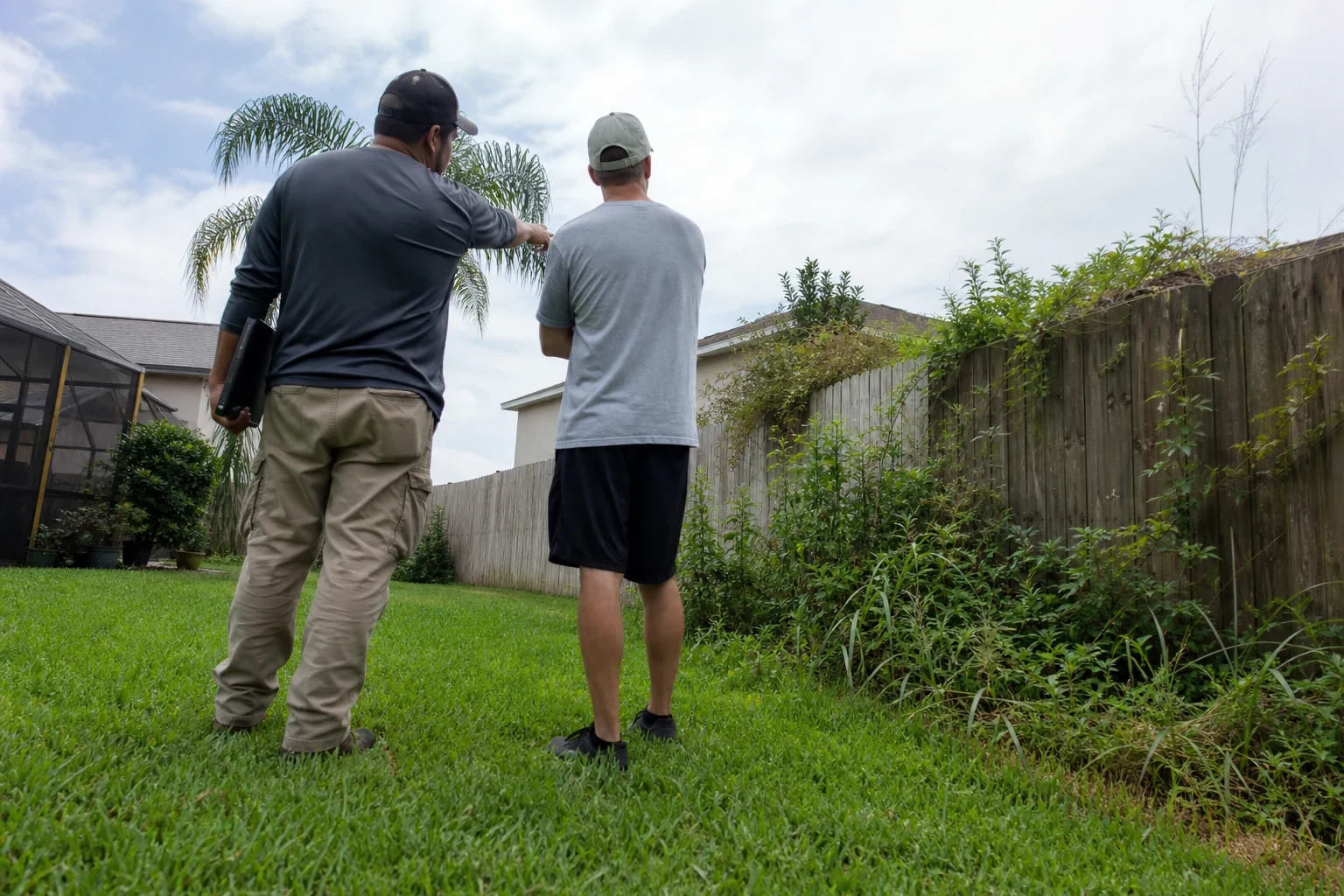
We look at each tree, the targets underneath it and the access for equipment. You get a written estimate that lists which trees, which cuts and what happens to the debris.
- 2
Rules and utilities checked
We confirm county, city and HOA requirements for your address. If limbs are near power lines, we contact the utility, since that clearance work is reserved for line-qualified crews.
- 3
Setup on the day
We mark the drop zone, lay protection over turf and pavers where needed, and keep people and pets out of the work area.
- 4
Cutting and rigging
Climbers or a lift handle the canopy work, lowering heavy wood on ropes instead of free-dropping it near your home.
- 5
Cleanup and review
We chip brush, haul wood and clean the site, then walk the property with you so you can see every cut before we leave.
Tree trimming and removal questions
Do I need a permit to remove a tree from my yard?
It depends on where your property is and what kind of tree it is. Some local governments regulate removal of larger or protected trees, and Florida law limits those requirements when a tree is documented as a danger. Your HOA may also require approval regardless. We check all of this for your address before scheduling.
When is the best time to prune?
Late winter through spring is ideal for most shade trees, and getting structural pruning done before hurricane season starts in June reduces storm damage. Dead or hazardous limbs can come out any time of year.
Will you top my tree to make it shorter?
No. Topping leaves large stubs that rot and sprout clusters of weakly attached shoots, which makes the tree more dangerous over time. We reduce height by cutting back to a lateral branch big enough to take over as the new leader.
Can you trim branches near power lines?
Not the lines serving the utility network. Work within that clearance zone is done by the power company's qualified crews, and we contact them when it applies. We can handle the rest of the tree once the lines are cleared.
What happens to the stump after removal?
We cut it as low as practical. If you want it gone below grade so you can replant or lay sod, our stump grinding service takes care of it, often during the same visit.
Get the trees around your home looked at
We will walk your property, point out what needs pruning and what needs to come down, and tell you which permits apply. The estimate costs you nothing.