ServicesLawn Care
Lawn Care in Lake Buena Vista
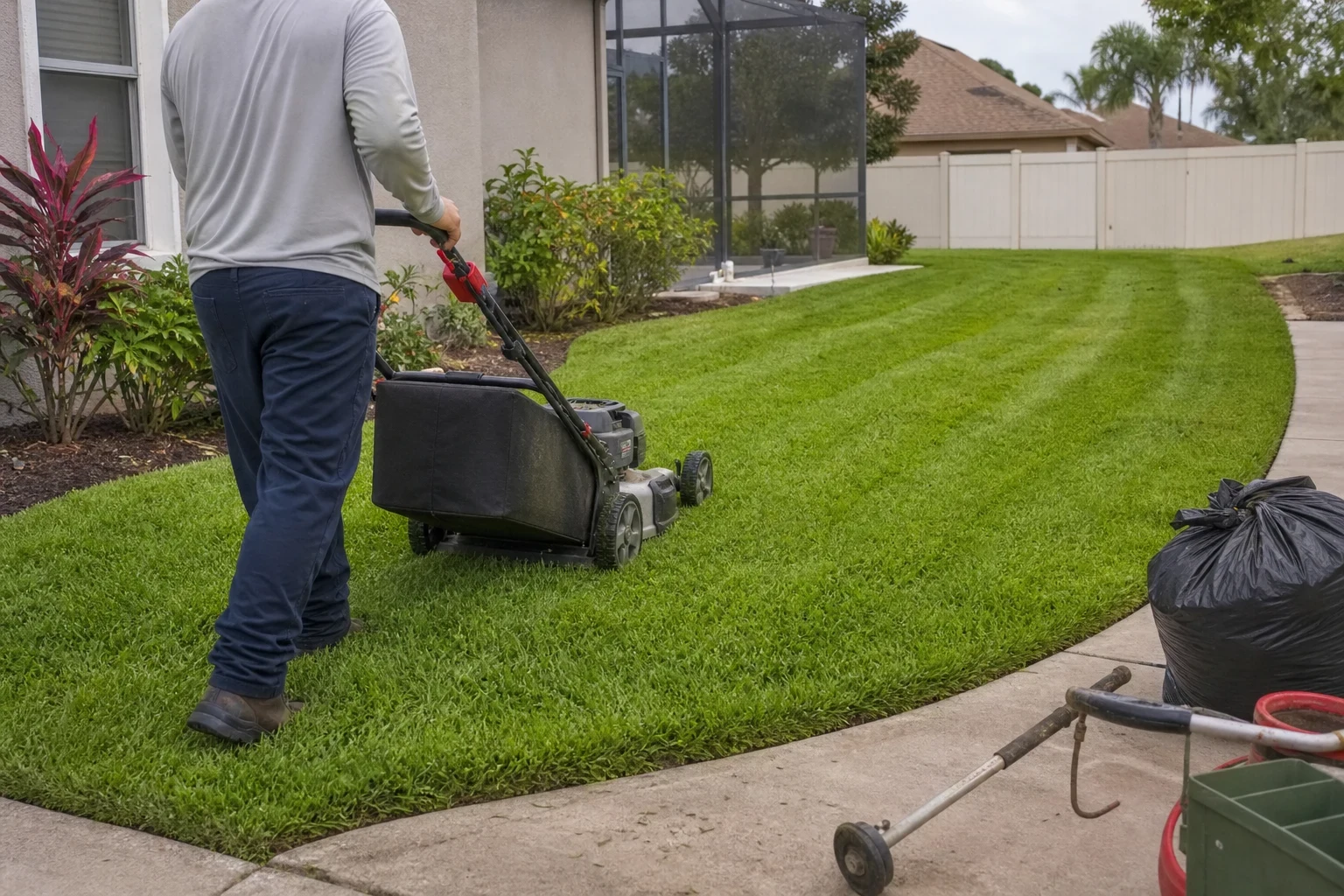
We mow at the right height for your grass, edge every hard surface and feed the lawn within county fertilizer rules. You get a thicker turf that resists weeds and chinch bugs, and a crew that keeps clippings out of the storm drain.
What Regular Lawn Care Does for Your Home
A Florida lawn is a living system sitting on sandy soil that holds little water and few nutrients. Most problems we see trace back to a few causes: mowing too short, feeding at the wrong time of year, and watering on the wrong schedule. Fix those and the grass does most of the work of crowding out weeds on its own.
Our lawn care visits cover mowing, edging, string trimming and blowing hard surfaces clean, plus a scheduled fertilizer and weed program if you want one. We also walk the turf looking for early signs of insects and fungus, because catching chinch bugs in one patch is far cheaper than resodding half the yard.
Rules matter here. Area counties restrict nitrogen and phosphorus fertilizer during the summer rainy season, keep fertilizer out of buffer zones along ponds and canals, and forbid blowing clippings into streets and drains. Water management district rules limit which days you can irrigate. We plan your program around those limits so your lawn stays healthy and your yard stays compliant.
What a Lawn Care Visit Includes
- Mowing at the right height
- St. Augustine is cut at roughly 3.5 to 4 inches, Bahia at 3 to 4, and Zoysia lower, around 1.5 to 2.5. Taller blades shade the soil, hold moisture and keep weed seeds from germinating. We keep blades sharp so tips are cut cleanly instead of torn, which leaves less entry for fungus.
- Edging and string trimming
- We edge driveways, walks and bed lines with a vertical blade and trim around fences, posts and trees by hand. Trimmer line never touches tree trunks, since bark wounds invite decay.
- Clean hard surfaces
- Clippings are blown back onto the lawn, never into the street or a storm inlet. Returning clippings to the turf also recycles nitrogen into the soil.
- Fertilizer and weed program
- Slow-release nitrogen applied in the months the ordinance allows, iron or micronutrients when the grass yellows during the restricted season, and spot treatment of weeds rather than blanket spraying. We leave the buffer strip along any water body untreated.
- Turf health checks
- Each visit we look for chinch bug damage, sod webworm feeding, large patch in cooler months and gray leaf spot in summer heat. If we find something, you get a photo and an explanation before anything is applied.
Signs Your Lawn Needs a Better Routine
Yellow patches that keep spreading
Dry-looking spots in sunny areas near the driveway or sidewalk are a classic chinch bug pattern in St. Augustine. Watering more will not fix it.
Scalped or thin turf
Brown, stubby grass after mowing means the deck is set too low. Repeated scalping weakens roots and opens the ground to crabgrass and sedge.
Weeds outnumbering grass
Dollarweed and sedge thrive in wet, thin lawns. They usually point to overwatering and short mowing more than a missing herbicide.
Rings or tan circles in fall
Large patch fungus shows up as expanding circles when nights cool off and the soil stays damp. Late-day watering and excess nitrogen make it worse.
Fertilizer stains or burn
Striped or scorched areas come from uneven spreading or the wrong product. They also suggest fertilizer may be landing where it should not.
How We Start and Run Your Lawn Care
- 1
Phone call and walkthrough
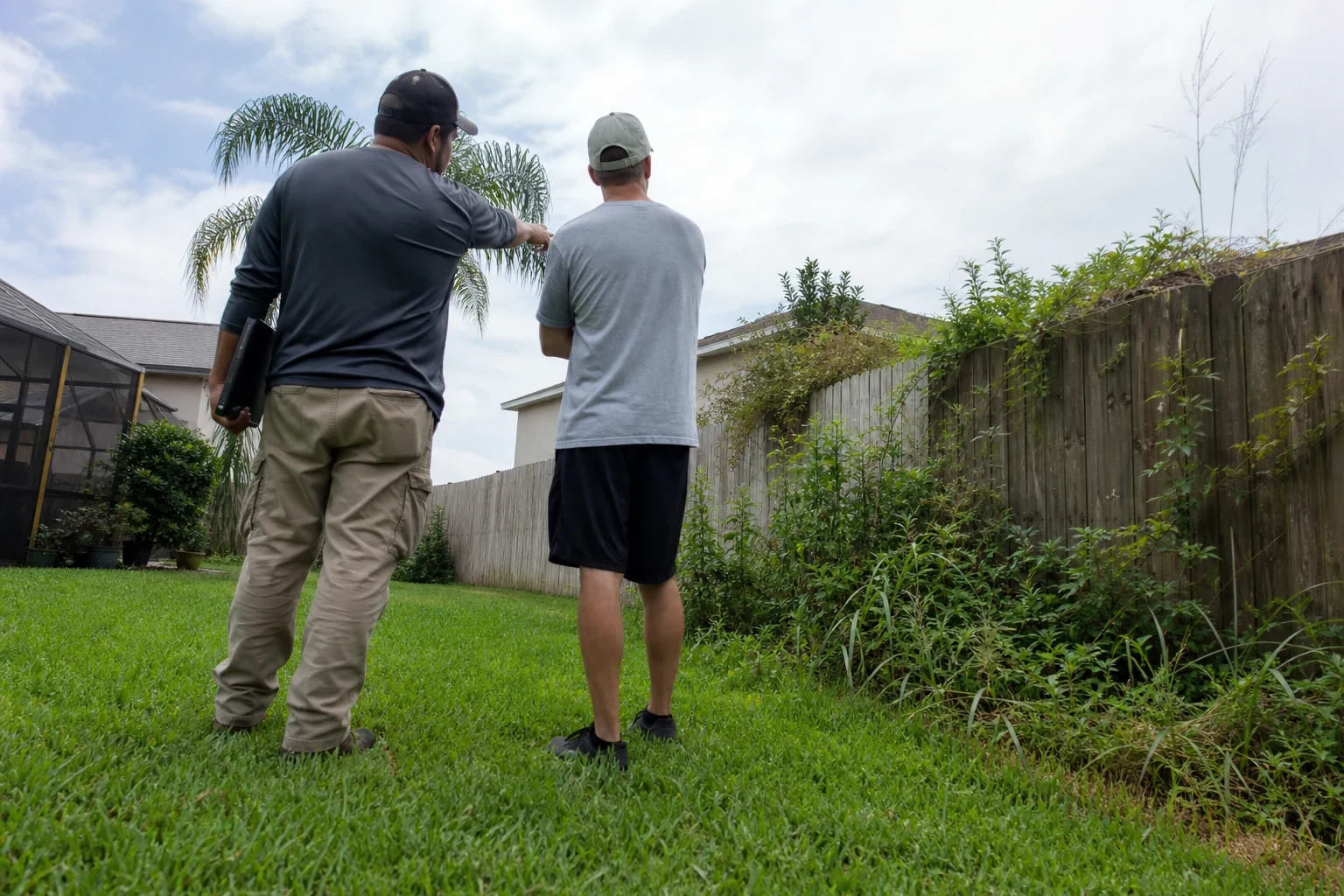
You call, and we set up a free on-site walkthrough. We identify your grass type, check soil and shade, and note any ponds, canals or drains that affect where fertilizer can go.
- 2
Written plan
You get a written estimate that lists mowing frequency, which treatments are included and when each one happens. Nothing is added without asking you first.
- 3
Visit day
The crew mows, edges, trims and blows surfaces clean, then walks the lawn for problems. Gates are closed behind us, and we mow around sprinkler heads instead of over them.
- 4
Seasonal adjustments
Mowing slows in the cooler months when growth drops, and the feeding schedule shifts when the summer fertilizer restriction begins and ends. We tell you if your irrigation timer should change too.
What Moves the Price of Lawn Care
Lawn care is priced per visit or per month based on what your yard actually needs. Your free estimate breaks out mowing and any treatment program as separate lines, so you can see what each part costs and choose what to include.
- Turf area
- The square footage of grass is the main driver. A small front yard takes minutes; a corner lot with a large backyard takes much longer.
- Obstacles and trimming
- Beds, trees, fences, play equipment and slopes all add hand trimming time. Open, flat lawns cost less to maintain.
- Visit frequency
- Weekly visits in the summer growing season cost more over the year than every-other-week service in the cool months, but they prevent overgrowth that forces heavy cuts.
- Treatment program
- Adding fertilizer, weed control and pest treatment raises the cost. Lawns that start out weedy or insect-damaged need more work in the first season.
Lawn Care Questions
Something not covered here? (407) 584-3857
Why can't you fertilize my lawn in the summer?
Counties around the area restrict nitrogen and phosphorus fertilizer during the summer rainy season because heavy rain washes it into lakes and ponds. We follow that window. If the grass pales during those months, we can apply iron or micronutrients, which are allowed and keep the color up.
How often should my lawn be mowed?
Most St. Augustine lawns need weekly mowing in the warm months and every other week when growth slows in winter. The rule is to never remove more than a third of the blade at once. Cutting more than that stresses the grass and invites weeds.
My sprinklers run often but the lawn still has brown spots. Why?
Brown spots with plenty of water are often chinch bugs, a broken or blocked head, or poor coverage. We check for insects during the visit. If the cause is the sprinkler system, our irrigation service can test coverage and repair heads.
Do you bag clippings?
Usually not. Mulched clippings return nutrients to the soil and do not cause thatch on a properly mowed lawn. We blow any that land on pavement back onto the grass, which also keeps them out of the storm drain as local rules require.
What if my lawn is too far gone to fix?
Sometimes a lawn with heavy weed cover or large dead areas is better replaced than treated. We will tell you that honestly after the walkthrough, and our sod installation service handles the replacement. If you would rather spread the cost of a larger job over time, we offer financing for amounts as high as $100,000, with terms anywhere from two to twelve years, and paying the balance off early carries no penalty.
Get a Lawn Program Built Around Your Grass
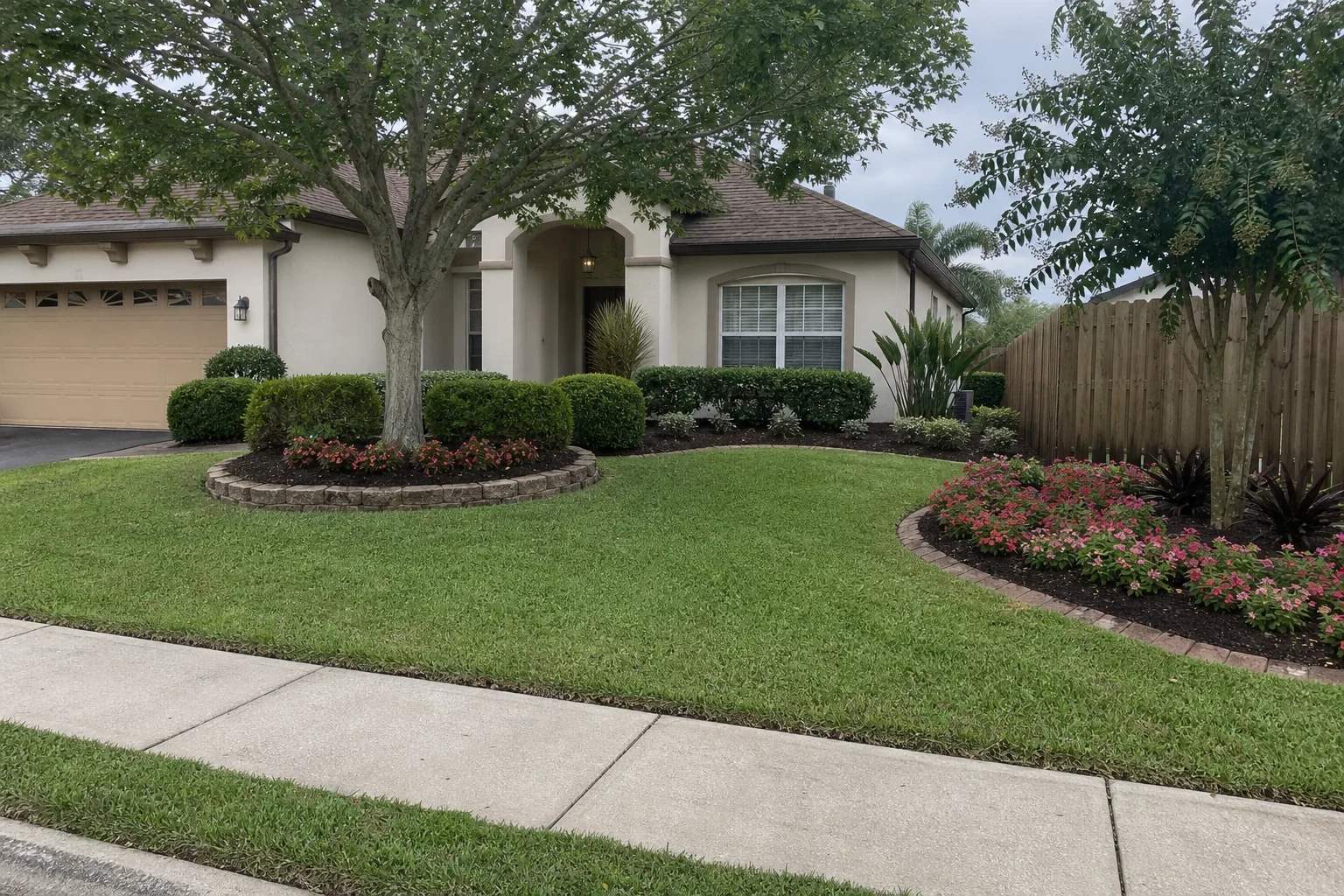
We will walk your yard, identify the turf and any trouble spots, and give you a written plan that fits the county rules. The estimate is free.