ServicesLandscape Design
Landscape Design in Lake Buena Vista
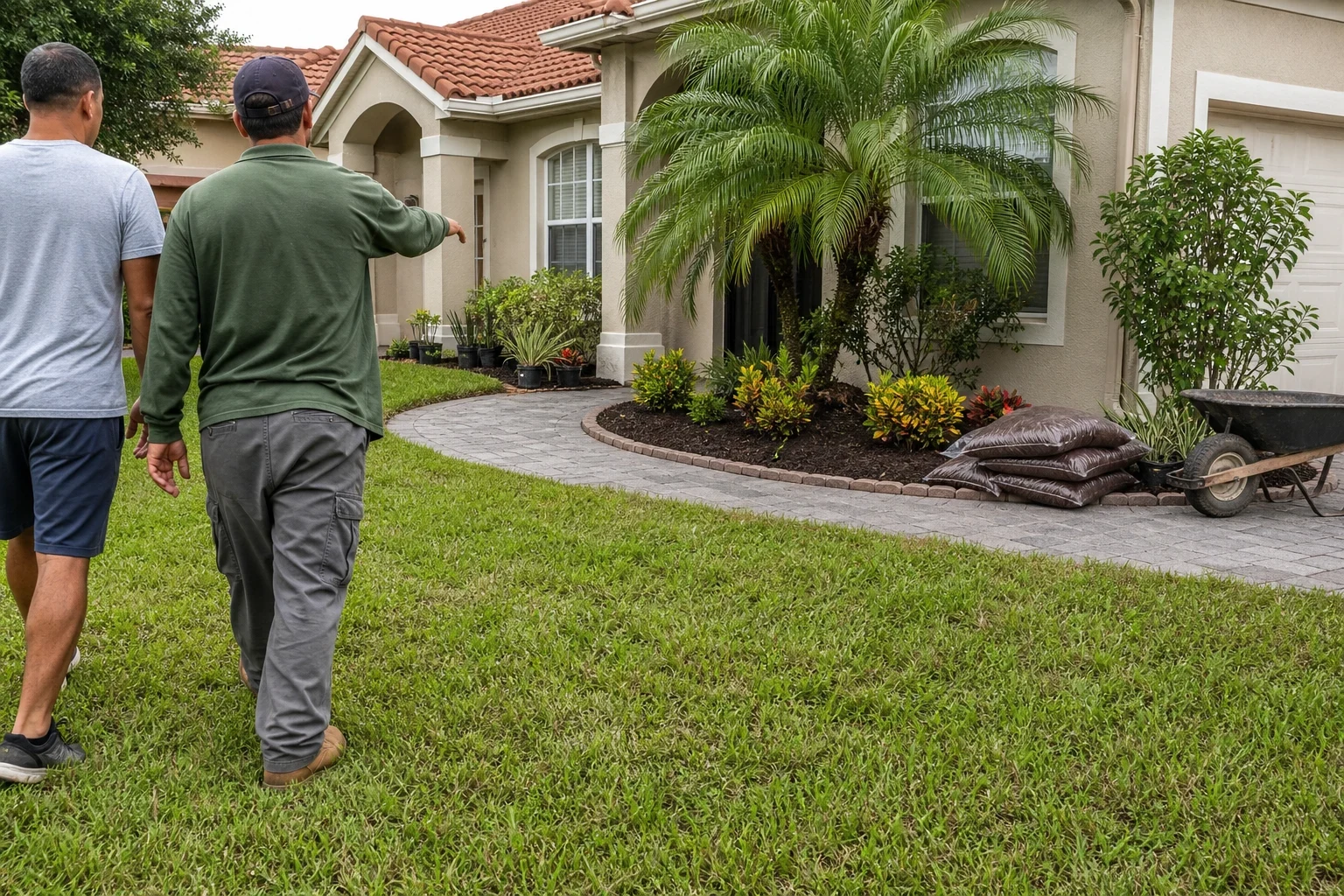
We draw a scaled plan for your yard that places every bed, plant and path for a reason: where water drains, how much sun each spot gets, and what your HOA and the county will approve. You see it on paper before any soil moves.
A plan that works before it gets planted
Most landscapes that fail were never really designed. Someone bought plants that looked good at the nursery, set them too close to the house, and watered them on the same zone as the lawn. Two summers later the shrubs are rubbing the siding, the turf under the oaks is thin, and water is pooling against the slab after every afternoon storm.
Our landscape design work starts with the conditions on your lot: soil, slope, shade, existing trees and where runoff goes. From there we lay out beds, turf areas, hardscape and irrigation zones so each part has what it needs. Plant choices follow the Florida-Friendly idea of right plant, right place, which in sandy, fast-draining soil means fewer losses and less water.
We also handle the paperwork side plainly. If your community requires architectural review, we prepare the drawing and plant list the board asks for. If any element needs a county permit, we tell you before the plan is final, not after.
What the design includes
Site survey and measurements
We measure the lot, mark existing trees, utilities, downspouts and hose bibs, and note sun exposure on each side of your home. This becomes the base drawing everything else sits on.
Grading and drainage layout
Beds and turf are shaped so water moves away from the foundation and does not get pushed onto a neighbor's lot. Low spots that hold water after summer rains get a swale, a dry creek bed or plants that tolerate wet roots.
Scaled planting plan
Each plant is drawn at its mature width, not its pot size. That keeps a dwarf yaupon or Simpson's stopper from outgrowing a window, and keeps shrubs off walls and A/C units where they trap moisture.
Irrigation zoning
Turf, shrubs and trees use water at different rates, so we group plants by need and show how the zones should split. Our irrigation crew can install or rework the system to match.
HOA approval package
A clean plan view with a labeled plant list, quantities and materials. Most review boards want exactly this, and a complete package avoids a round of revisions.
Signs a real design would help
- Water sits near the house
- Puddles along the foundation after a storm mean the grade is wrong. Planting on top of a bad slope only hides it.
- Shrubs keep getting cut back hard
- If hedges need heavy trimming every few months to clear windows, they were the wrong size for the spot. Replacing them with plants that mature smaller ends the cycle.
- Grass dies in the same places
- Bare patches under tree canopy or along a hot west wall usually point to the wrong turf for the light. Shade beds or a different groundcover often do better than resodding.
- The HOA sent a letter
- A violation notice or a turned-down change is a good time to start with a proper plan. We draw it to the community's guidelines so the next review goes through.
- You are planning a patio or pool deck
- Hardscape changes drainage and sun patterns. Designing the plantings and the paving together prevents tearing up new beds later.
How a design project runs
- 1
On-site walkthrough
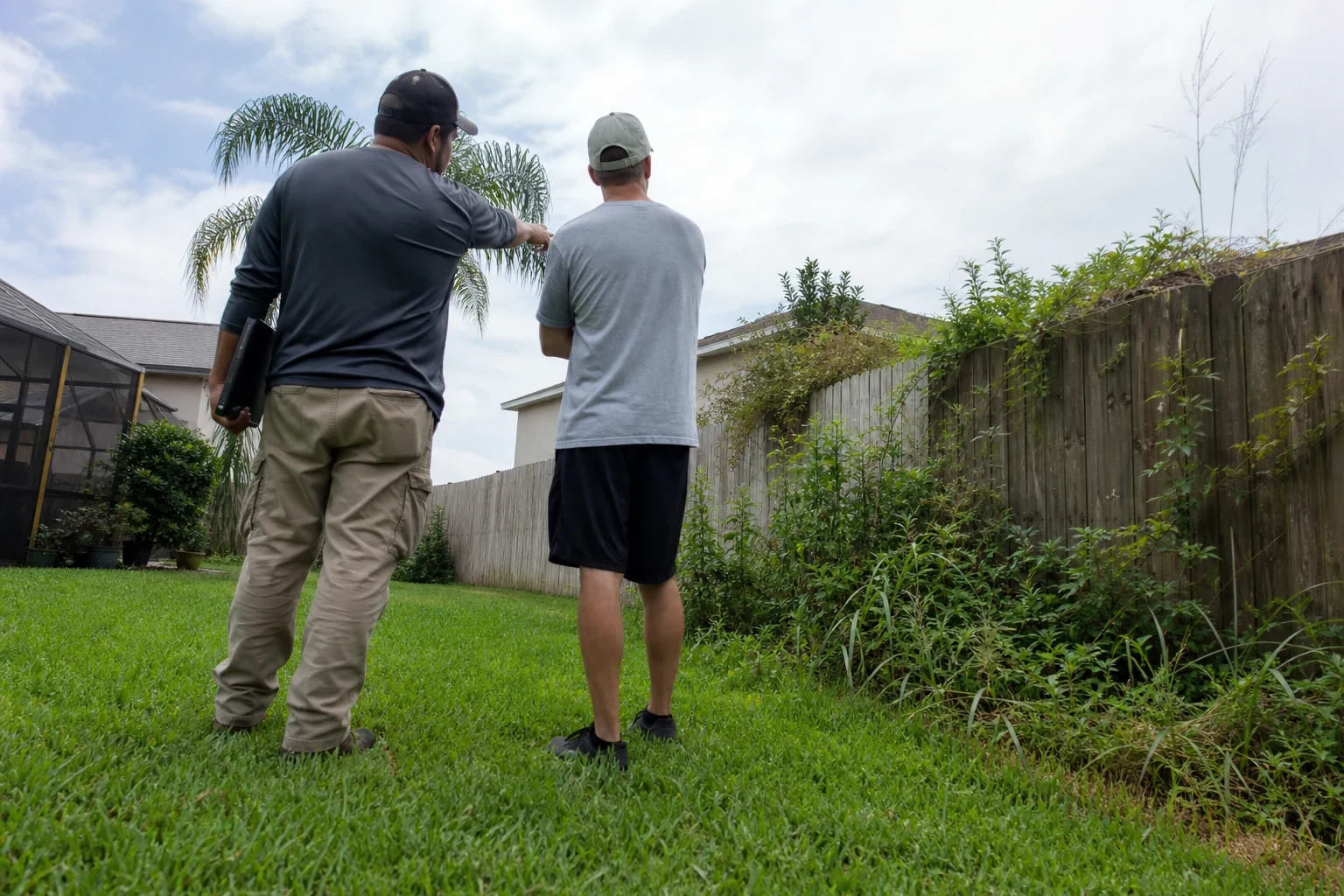
We walk the property with you, talk through how you use the yard, and note problems like soggy corners or root-lifted edging. This visit and the estimate are free.
- 2
Utility locates and site notes
Before any plan calls for digging, we contact Sunshine 811 so buried lines are marked. We record soil type, existing irrigation heads and any trees worth keeping.
- 3
Draft plan and review
You get a scaled drawing with a plant list and notes on drainage and zoning. We adjust it with you until the layout, plant choices and budget line up.
- 4
Approvals
We prepare the HOA package and confirm whether anything, such as a retaining wall or work near the road right-of-way, needs a county permit. Installation is scheduled after approvals are in hand.
- 5
Installation
Our crews build the plan in order: grading, irrigation, hardscape, then plants, sod and mulch. Work areas are cleaned up at the end of each day.
What moves the cost of a design
A design for a front bed refresh is a different job from a full yard with new grading, a patio and a rebuilt irrigation system. We price the drawing and the installation as separate line items so you can see each one. Your free estimate lists what the plan covers and what it does not.
- Size and scope
- Square footage matters, but so does how many elements are involved. Planting only is simpler than planting plus hardscape and new irrigation zones.
- Drainage work
- Regrading, swales or dry creek beds add labor and material. Fixing a drainage problem in the plan costs less than fixing it after planting.
- Plant size and selection
- Larger container sizes give an instant look but cost more per plant. Smaller sizes of the same species reach full size over a season or two.
- Approvals and permits
- HOA revisions and any county permit add time and some fees. We tell you up front which ones your plan triggers.
Landscape design questions
- Do I need a permit for landscaping work?
- Most planting, mulching and bed work does not need a county permit. Items like retaining walls above certain heights, structures, or work in the road right-of-way can, and irrigation must follow local watering-day restrictions. We check your specific plan and tell you what applies before work starts.
- Will you deal with my HOA?
- We prepare the drawing, plant list and material notes laid out the way most review boards expect. You hand the package to the board as the owner, and if they ask for changes, we revise the plan. Many communities around Celebration and Horizon West have detailed guidelines, so we design to them from the start.
- Can I have a design without having you install it?
- Yes. The plan is yours to use. Many homeowners install in phases, starting with grading and irrigation and adding beds or a patio later.
- Which plants hold up best here?
- It depends on the spot, but natives and Florida-Friendly plants such as coontie, firebush and muhly grass handle sandy soil, summer rain and the occasional winter frost well. We match each plant to the light and moisture where it will grow.
- Is financing available?
- Yes, for amounts up to $100,000. Terms run anywhere from 2 to 12 years, and paying the balance off early carries no penalty. Ask about it on the call while we walk through your estimate.
Start with a walkthrough of your yard
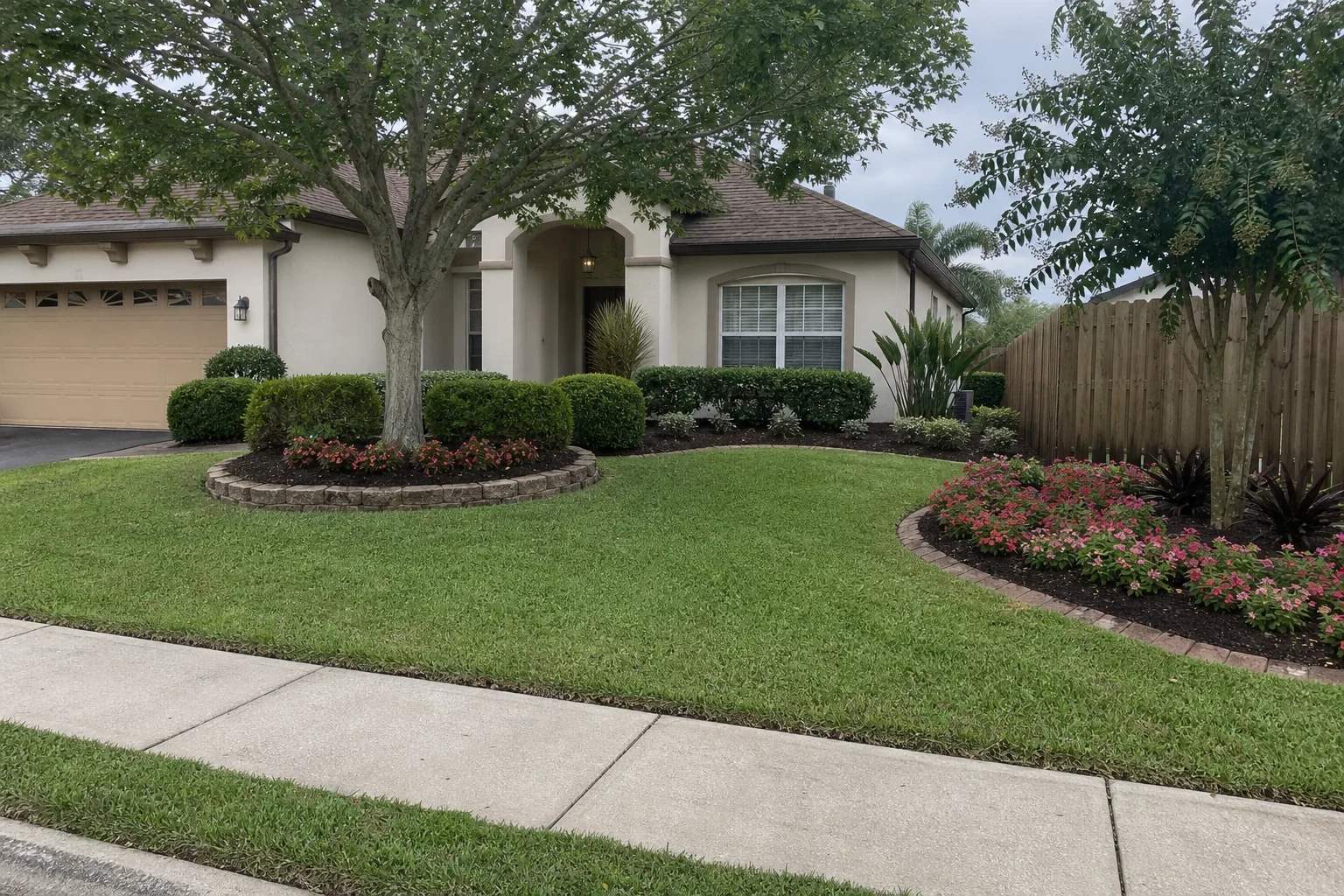
We will look at drainage, sun and what your HOA allows, then explain what a plan would include. The estimate is free, and you can get it by phone.