ServicesBamboo Removal
Bamboo Removal in Lake Buena Vista
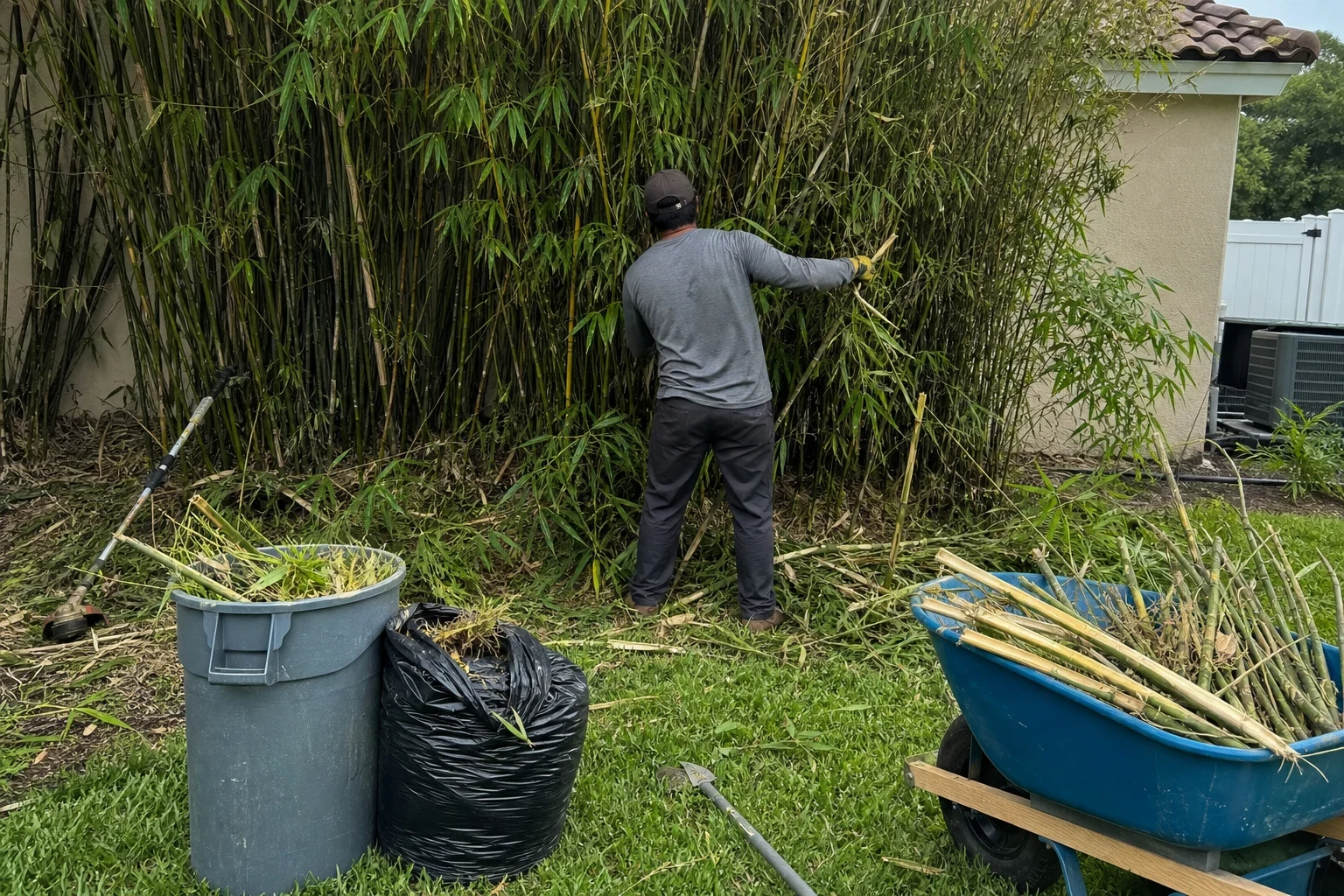
Cutting bamboo to the ground only feeds the roots. We remove the canes and excavate the rhizome network underneath, locate utilities before we dig and can install barrier where the bamboo crosses a property line. The result is a cleared bed you can replant.
Why bamboo needs to come out from below
Bamboo stores its energy in rhizomes, the horizontal underground stems that send up new canes, called culms. Running types such as golden bamboo spread their rhizomes outward, often several feet a season, mostly in the top foot or so of soil. Clumping types grow a dense crown that widens more slowly but becomes almost solid wood at the base. Golden bamboo also appears on Florida's invasive plant lists, so leaving pieces behind is a real problem.
If you mow or saw the canes and leave the rhizomes, the plant pushes up fresh shoots within weeks. Permanent removal means taking out the live rhizomes, sifting the soil for broken segments and watching the area for stragglers. That is the work we quote.
What our bamboo removal includes
- Cutting and hauling the culms
- We cut every cane at the base, bundle it and haul it off your property. Mature canes are hard and split sharp, so nothing is left lying in the yard.
- Rhizome excavation
- We dig out the rhizome mat by hand or with a compact excavator, depending on access and how far the stand has spread. We follow runners to their tips instead of stopping at the visible edge of the grove.
- Crown removal for clumping bamboo
- Clumping bamboo leaves a dense woody crown. We dig it out or break it down, and if grinding is the better route we cover it the same way our stump grinding crew handles a hardwood stump.
- Soil sifting and backfill
- Broken rhizome segments as short as a few inches can resprout. We rake and sift the excavated soil, remove what we find and backfill and level the area.
- Root barrier installation
- Where bamboo is coming in from a neighbor's yard, we can trench along the line and set high-density polyethylene barrier deep enough to block new rhizomes, with a lip left above grade so runners can't hop over the top.
- Follow-up check
- We come back to look for new shoots after the first growth flush and pull or spot-treat anything that appears.
Signs it's time to remove your bamboo
Shoots in the lawn
New culms poking up through turf several feet from the grove mean running rhizomes are already under your grass.
Pressure on hardscape
Rhizomes travel along the edges of slabs and pavers. Lifted pavers, cracked edging or shoots coming through joints point to roots working under the surface.
Sprinkler trouble near the stand
Bamboo wraps around irrigation lines and crowds heads. Low pressure or a zone that never covers right next to a grove is a common clue.
Spread across the property line
If your bamboo is moving into a neighbor's yard, or theirs into yours, it usually needs removal plus a barrier along the line.
A grove you can't walk into
A clump so dense you can't reach the center holds dead canes, debris and pests and keeps light off everything around it.
What affects the cost of bamboo removal
Two stands of the same width can price very differently because most of the work happens below ground. We probe the rhizome spread during the walkthrough so the estimate reflects what is actually there. When removal is one piece of a bigger yard project, you can finance as much as $100,000, choose a term anywhere from 2 to 12 years and pay it off early without a penalty.
Running or clumping type
Running bamboo spreads wide and shallow, so excavation covers more ground. Clumping bamboo is compact but its crown takes heavy digging or grinding.
Size and age of the stand
Older groves have thicker culms, more haul-off volume and a denser rhizome mat.
Access and nearby structures
Narrow side yards, fences and slabs mean more hand digging and less machine work. Bamboo growing against a foundation or pool deck takes extra care.
Root barrier length
Barrier is priced by the run of trench along the line you want protected, plus the depth needed.
Irrigation repairs
If rhizomes have strangled sprinkler lines, we note it and quote the repair separately so you can decide.
How a bamboo removal job runs
- 1
Walkthrough and written estimate
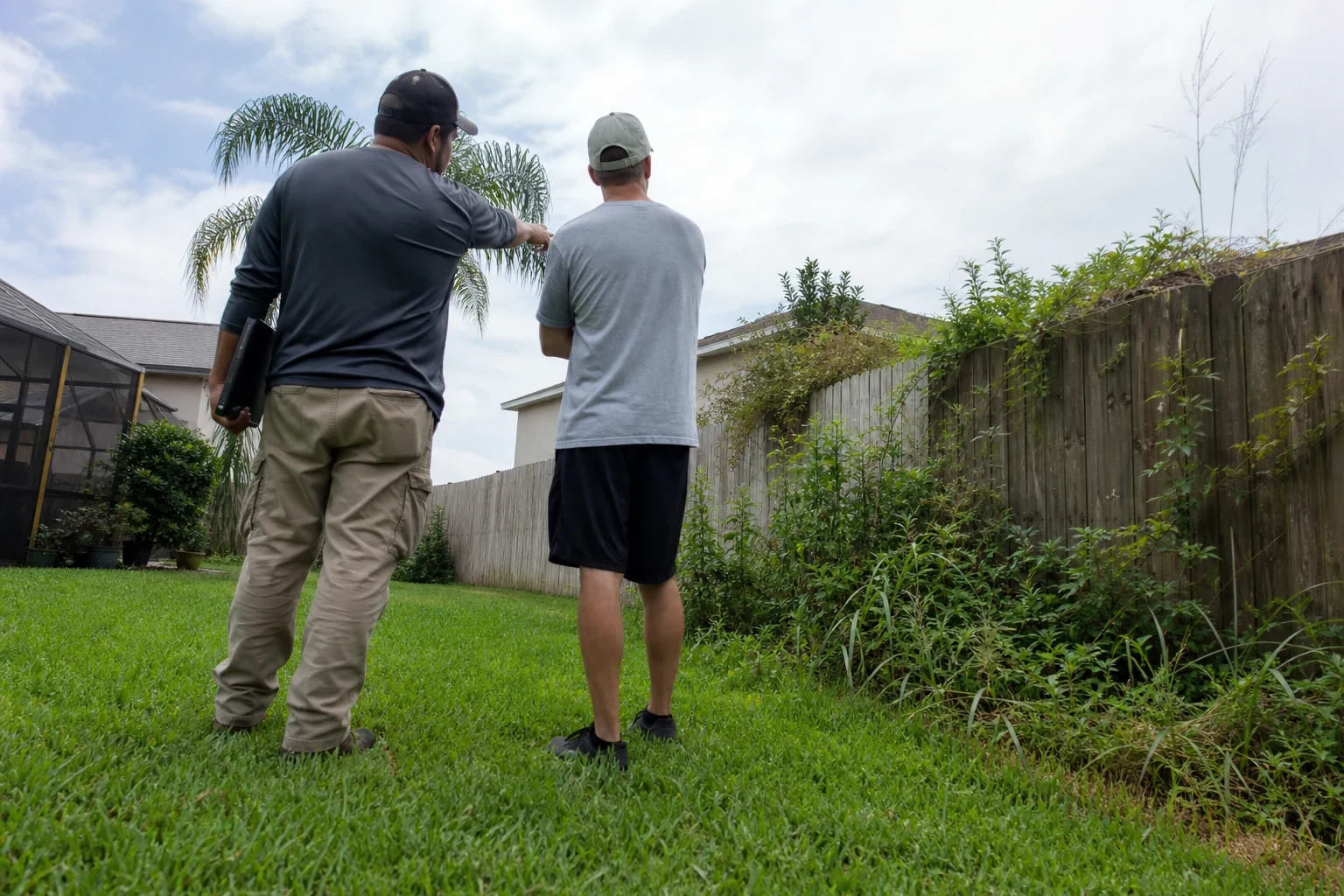
We measure the stand, probe the edges to see how far the rhizomes run and note slabs, fences and sprinkler lines nearby. You get a written estimate that separates cutting, excavation, haul-off and any barrier.
- 2
Locates and approvals
Florida law requires a Sunshine 811 locate request before excavation, so we file it and wait for buried utilities to be marked. If your HOA asks for notice before removal or barrier work, we'll explain what associations usually want to know so you can clear it with them. Removing bamboo alone typically doesn't need a county permit, and we'll say so plainly if your job is different.
- 3
Cut, dig and sift
We clear the canes first, then excavate the rhizomes, flag and protect irrigation lines we uncover and sift the soil as we backfill. Plywood goes down over lawn where equipment travels.
- 4
Barrier, grade and cleanup
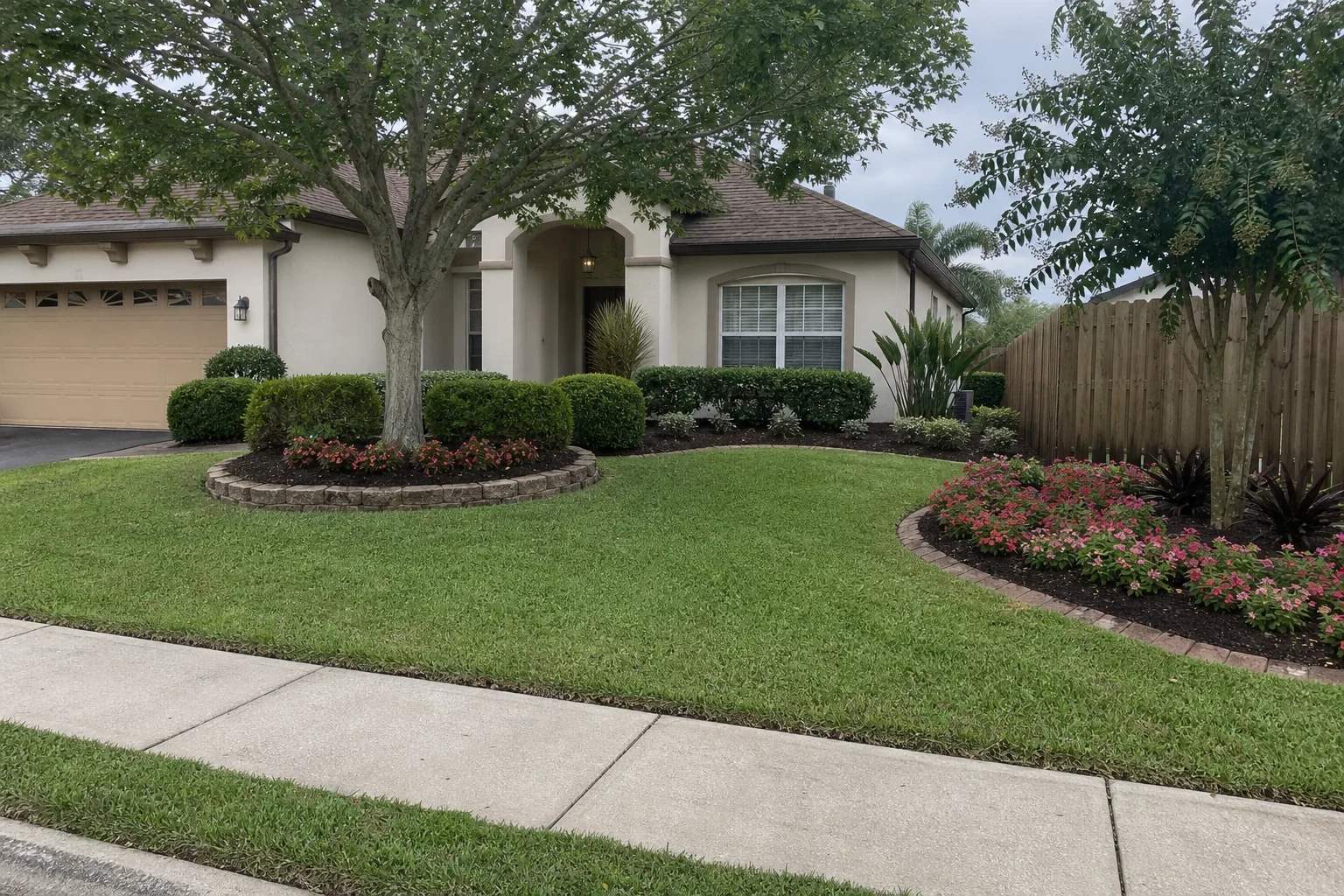
If barrier is part of the job, it goes in before final grading. We level the soil, rake out debris and leave the area ready for sod installation or new beds.
- 5
Return visit
We check back after the first new growth and handle any shoots from missed segments.
Bamboo removal questions
Can't I just cut it down and spray it?
Cutting and spraying can weaken a small stand over several seasons, but bamboo's rhizome reserves make it slow and uncertain. Each cut triggers new shoots from stored energy. Digging out the rhizomes is the faster, more reliable route, and we only spot-treat the stragglers afterward.
How deep do bamboo roots go?
Most rhizomes sit in roughly the top foot of soil, which is why they surface in lawns and beds. The fibrous roots hanging off them go deeper, but those don't sprout. We dig to the depth of the rhizome mat and follow runners outward.
Will bamboo come back after removal?
Small rhizome pieces missed in the soil can sprout. That's why we sift the soil and return after the first growth flush. A few stray shoots are normal and easy to remove while they're young.
The bamboo is coming from my neighbor's yard. What can you do?
We remove everything on your side of the line and install root barrier along the boundary to stop new rhizomes from crossing. We don't work on the neighbor's property without their permission.
Do I need a permit to remove bamboo?
In most cases removing bamboo doesn't require a county permit, but digging does require an 811 utility locate, which we file. Some HOAs want notice before removal or barrier work. We'll go over what applies to your home during the estimate.
What can I plant afterward?
Once the area is cleared and graded, it's ready for sod or new beds. Our landscape design team can plan the space so it fills in with something that stays where you put it.
Get the bamboo out for good
We'll walk the stand with you, show you how far the rhizomes run and give you a written estimate for removal and any barrier. We serve Lake Buena Vista and nearby towns including Celebration, Hunters Creek and Horizon West.