ServicesMulch and Beds
Mulch and Bed Work in Lake Buena Vista
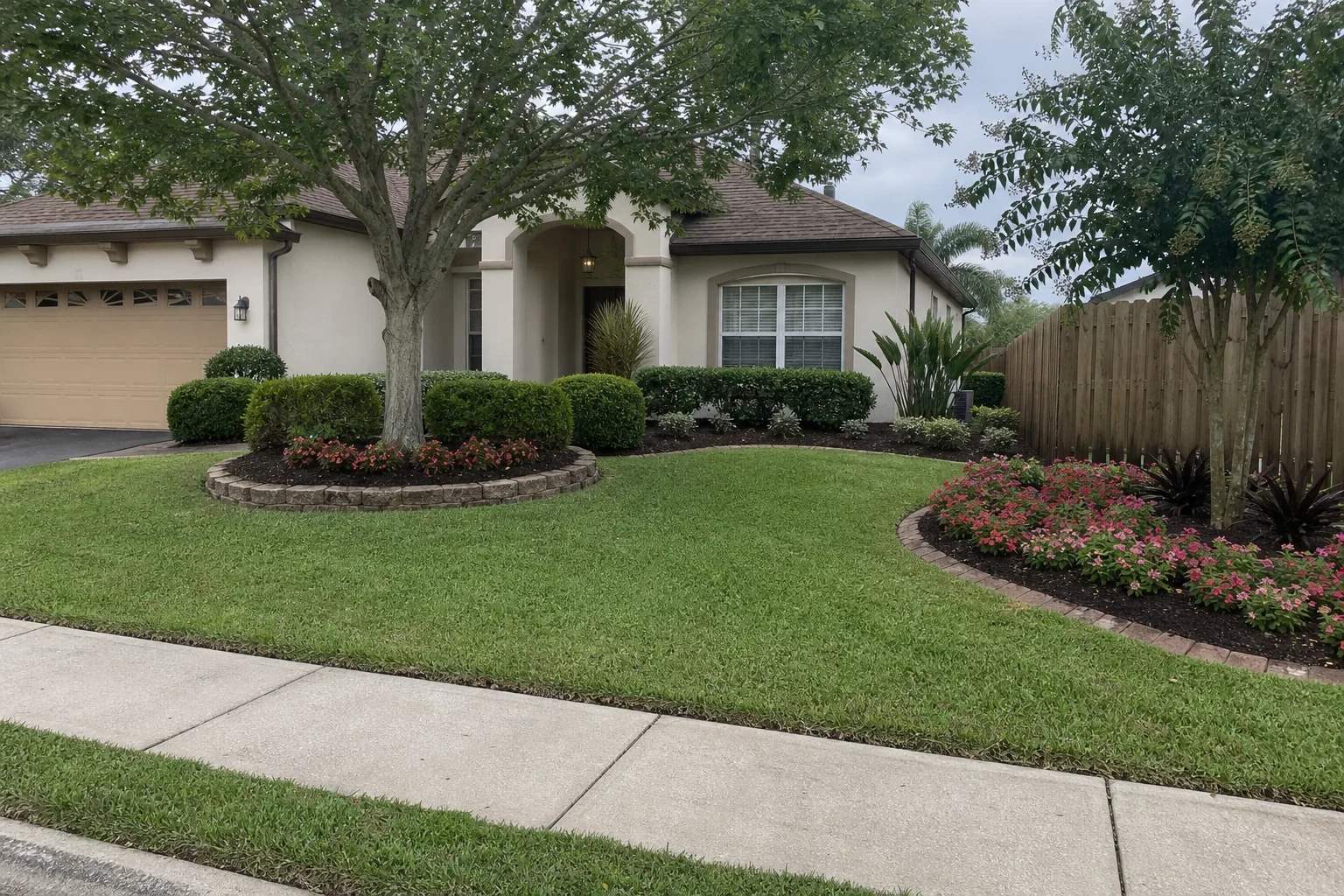
We clear weeds by the root, recut bed edges and lay mulch two to three inches deep, pulled back from tree trunks and your home's foundation. You get beds that hold moisture, block weeds and follow your HOA's rules.
What mulch and bed work actually does
Mulch is a working layer, not decoration. At the right depth it shades the soil, slows evaporation between irrigation cycles and starves weed seeds of light. Too thin and the weeds win. Too thick and the roots underneath sit wet, rot sets in and the bed starts to smell sour.
Most beds we look at need more than a fresh top layer. Old mulch has broken down into a mat that sheds water, landscape fabric has torn and let roots through, and the edge has drifted into the lawn. We fix what is underneath first, then mulch.
There are rules involved too. Many HOAs specify mulch color and type, and pine straw or rubber mulch is not allowed everywhere. Before any digging for new beds or edging, we call Sunshine 811 so buried utility lines are marked. We check both before we quote, so the job you approve is one you can keep.
What's included in a bed job
- Weed and root removal
- We pull weeds with the root and remove runners of torpedograss and Bermuda that have crept in from the lawn. Spraying alone leaves roots that come back in weeks.
- Old mulch assessment
- If the existing layer has compacted into a crust, we break it up or haul it off. Stacking new mulch on top of four inches of old is how beds end up smothered.
- Edging
- We cut a clean spade edge or install edging along the lawn line. A defined edge keeps St. Augustine stolons out of the bed and keeps mulch out of the turf.
- Fabric, where it helps
- We use landscape fabric only under rock or in beds without annual plantings. Under organic mulch it often traps fine soil on top and becomes a weed mat, so we will tell you when to skip it.
- Mulch at a measured depth
- Two to three inches across the bed, tapered to nothing at tree trunks and plant crowns, and held back from siding and slab edges. That gap keeps moisture away from the wall line and makes termite inspection easier.
- Irrigation check
- We flag buried or misaimed spray heads before covering them. If drip lines need adjusting, our irrigation service can handle it.
Signs your beds need attention
Bare soil is showing
Florida sun and summer rain break down pine bark and hardwood mulch fast. Once soil is exposed, it dries out and weeds germinate.
Weeds come back right after pulling
That usually means roots or runners are still in the bed, or the fabric underneath has failed.
Mulch piled against trunks
Volcano mulching holds moisture against bark, invites rot and borers, and encourages girdling roots. It should be pulled back.
Water runs off instead of soaking in
Old mulch can form a water-repellent crust, so irrigation sheets off and plants stay dry.
An HOA notice
Faded color, wrong material or ragged edges are common violation items. We match the community's written standard.
What moves the price
Bed work is priced mostly by area and by how much prep the beds need. Fresh mulch over clean beds costs far less than a full renovation. Your estimate shows each part separately so you can see where the money goes.
Square footage and depth
Mulch is bought by the cubic yard, so bed size and target depth set the material quantity.
Material choice
Pine bark, pine straw, eucalyptus, cypress, dyed hardwood and rock all differ in cost and lifespan. Rock lasts longest but holds heat near plants.
Removal and weeding
Hauling off compacted old mulch or clearing an overgrown bed adds labor and disposal.
Edging and access
New edging material and beds that are reachable only through a gate or around a pool cage add time.
How a bed job runs
- 1
Walkthrough and estimate
We measure each bed, check the depth of what is there and note your HOA requirements. You get a free estimate listing square footage, material and prep.
- 2
Utility marking
If the job includes new edging or new beds, we request Sunshine 811 locates and wait for the marks before digging.
- 3
Prep day
We pull weeds, remove spent mulch where needed, cut edges and correct any grade that drains toward your home's foundation.
- 4
Mulch and finish
Mulch goes down at depth, pulled back from trunks and walls. We blow off walks and drives and haul away debris.
Mulch and bed questions
How often should mulch be refreshed?
Most organic mulch here needs a top-up every six to twelve months. Pine straw breaks down faster than pine bark nuggets. We measure the remaining depth and only add what brings it back to two or three inches.
Which mulch is best for my beds?
Pine bark and pine straw are common, affordable and acidic enough for azaleas and gardenias. Eucalyptus resists breakdown. We also check what your HOA allows before recommending anything.
Does mulch attract termites?
Mulch does not draw termites from far away, but it keeps soil moist, which they like. That is why we hold mulch back from siding and slab edges and keep it below any weep screed, so the wall line stays visible for inspection.
Can you plant while you're redoing beds?
Yes. We can set new shrubs and groundcover before the mulch goes down. For a full redesign of the layout, our landscape design service plans spacing, sun exposure and plant choice.
Can I pay for a larger bed project over time?
Yes. You can borrow as much as $100,000 and pick a repayment term anywhere from two to twelve years. Paying the balance off early carries no penalty. Homeowners often use it when bed work is folded into a bigger project with sod or hardscape.
Get your beds measured and priced
We will walk the property, check depth, edges and HOA rules, and give you a line-item number by phone or on site.