ServicesPalm Tree Pruning and Removal
Palm Tree Pruning and Removal in Lake Buena Vista
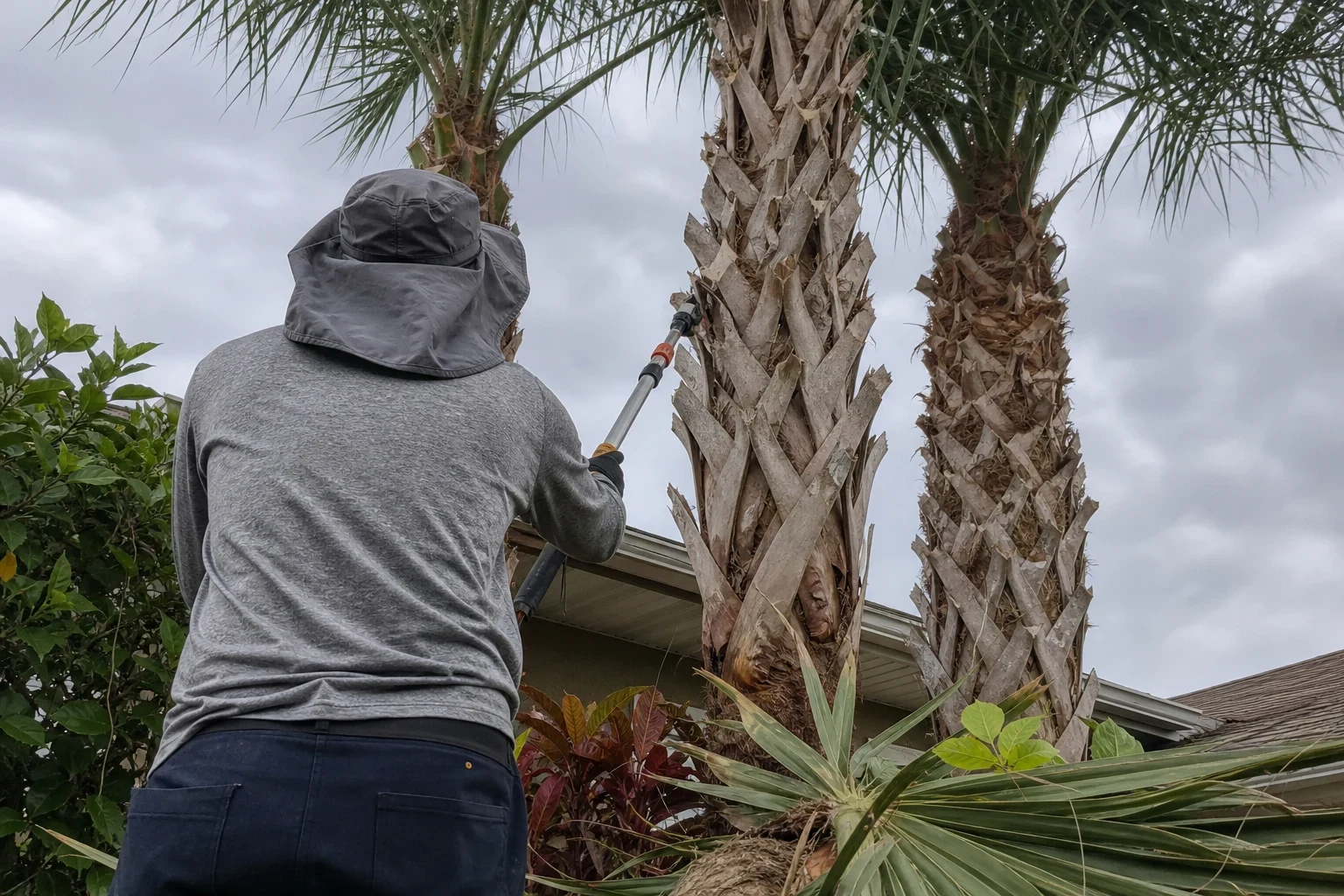
We trim palms the way they grow. Dead fronds, fruit stalks and loose boots come off, and the green crown stays. When a palm is diseased, leaning or crowding your home, we take it down in controlled sections and check permit and HOA rules before the first cut.
Pruning that protects the palm, removal that follows the rules
A palm has one growing point, the bud at the top of the trunk. It has no cambium layer, so trunk wounds never close, and a damaged bud cannot be replaced. That is why we prune conservatively. We remove fronds that are fully brown and the stalks carrying flowers or seeds, and we leave the green fronds that feed the tree.
The common hurricane cut strips a crown down to a few fronds pointed at the sky. It looks tidy for a month, but it narrows the trunk just below the head and starves the palm of potassium it would have pulled back from its older leaves. We won't do it.
Removal is a different job with its own paperwork. Before a palm comes down, we check whether your city or county and your homeowners association require a permit, an approval letter or a replacement planting. You hear what applies, we help you prepare it, and we schedule the cut once approval is in hand.
What our palm work includes
- Dead frond and seed stalk removal
- We cut fully brown fronds close to the trunk without tearing the petiole base. Flower and fruit stalks come off before they drop dates, queen palm seeds or sticky fruit on your driveway, pool deck or lanai.
- Boot cleanup on sabal palms
- The old leaf bases on cabbage palms, called boots, can stay or go. We remove only the ones that come away cleanly, since prying off green boots scars a trunk that can't heal.
- Climbing without spikes
- We work from ladders, lifts or climbing gear that grips without puncturing. Spike holes stay open for the life of the palm and give fungi a way in.
- Sanitized cutting tools
- Fusarium wilt travels on saw blades from one Canary Island date palm or queen palm to the next. We disinfect blades between palms so pruning doesn't spread disease across your yard.
- Sectional removal near structures
- Palms beside your home, a screen enclosure or a fence come down in pieces lowered by rope. The crown goes first, then the trunk in manageable sections.
- Haul-off and stump options
- Every frond and trunk section is chipped or hauled away. The stump can be cut flush, or ground below grade as part of our stump grinding service.
Signs your palm needs pruning or removal
Brown fronds hanging below the crown
Fronds that have dropped below horizontal and turned fully brown are spent. Left on, they hold moisture and pests and can tear loose in a summer storm.
Orange speckling on older fronds
This usually means potassium or magnesium deficiency, not a need for more cutting. We'll tell you so and leave those fronds on, because the palm is drawing nutrients from them. Fertilizer fixes it, not pruning.
Shelf-like conks at the base
A hard brown-and-white bracket on the lower trunk is the fruiting body of Ganoderma butt rot. There is no treatment. The trunk is decaying inside, and the palm should come down before it snaps.
A collapsing spear leaf or bronzing crown
When the newest unopened leaf pulls out easily, or the crown turns reddish-brown from the oldest fronds up, bud rot or lethal bronzing may have reached the growing point. A palm that loses its bud will not recover.
Fronds touching your roof or service lines
Fronds rubbing shingles wear them down, and fronds in power lines are a real hazard. Work within 10 feet of energized lines belongs to the utility's line-clearance crews, so we coordinate with them first.
A trunk that narrows near the top
A pencil-point neck records a stretch of stress, often drought or past over-pruning. That thin section is where the head breaks off in high wind.
What sets the price of palm work
Palm work is priced per tree, then adjusted for what makes each one harder or easier. Your estimate is free and itemized palm by palm, so you can decide which to handle now and which can wait.
Height and species
A short pygmy date palm is ladder work. A tall Washingtonia needs a lift or a climber. Self-cleaning royal and foxtail palms need far less pruning than a sabal carrying years of dead fronds.
Access and what's underneath
A palm in open lawn can be lowered in sections onto grass. One leaning over a pool cage, roof or septic drain field needs rigging and more time.
Disease and disposal
Palms with Fusarium wilt or Ganoderma call for extra blade sanitation and careful disposal so infected material never ends up in mulch.
Approvals and stump work
A removal that needs city sign-off, an HOA letter or a replacement planting adds steps. Grinding the stump is a separate line on your estimate.
How a palm job runs
- 1
Walkthrough and diagnosis
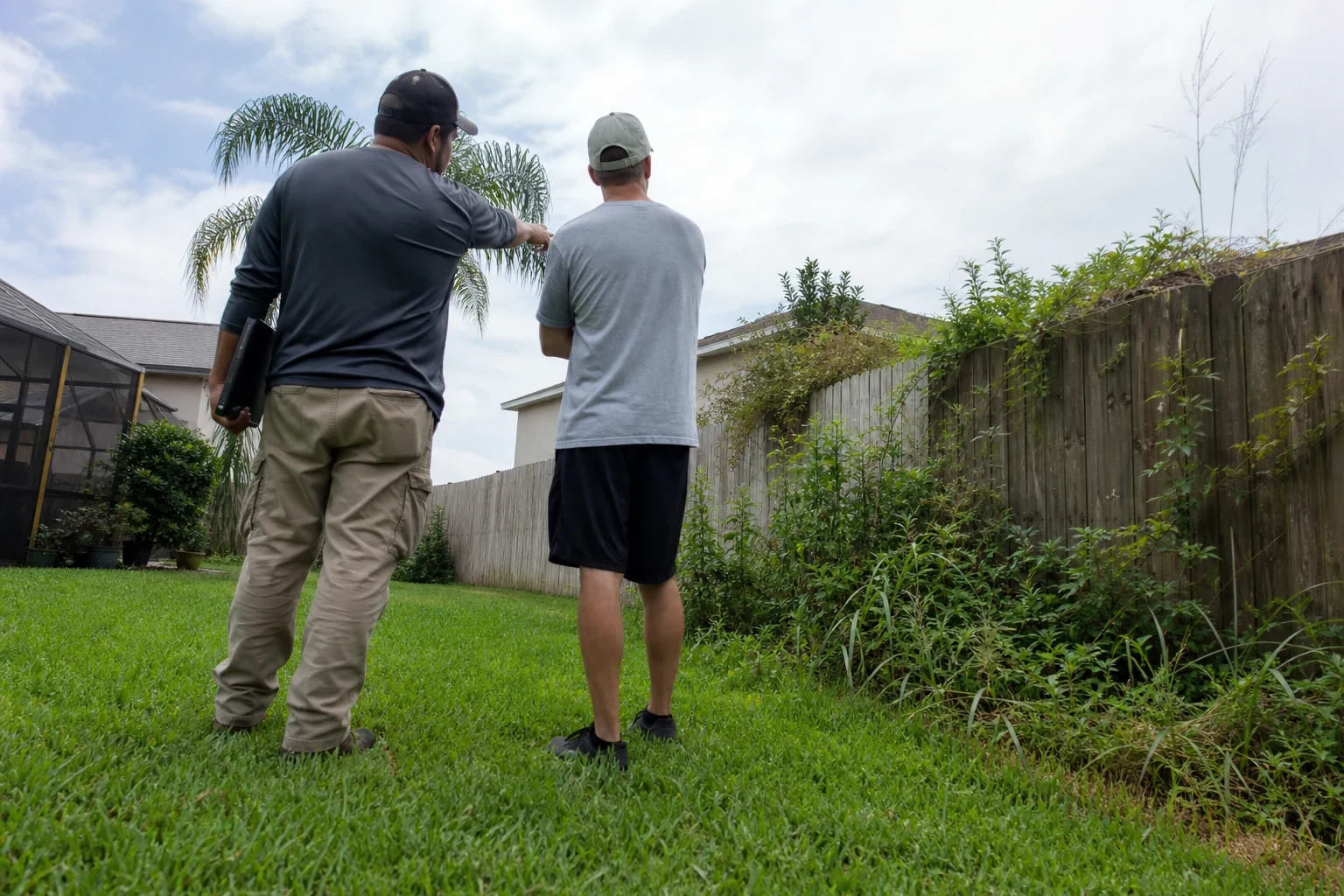
We look at each palm, identify the species, note any disease signs and check clearance to your home and lines. Your written estimate lists every palm and exactly what we plan to do to it.
- 2
Approval check
For removals, we confirm whether a permit or association approval is needed and whether a replacement tree is required. For pruning, we check any HOA rules on timing or appearance.
- 3
Setup on the day
We mark a drop zone, move patio furniture and protect beds and pavers where sections will be lowered. Blades are disinfected before the first cut.
- 4
Cutting and lowering
Fronds and stalks are cut and lowered or dropped into the cleared zone. On removals, the crown comes off first and the trunk follows in sections sized to what the ground and nearby structures can take.
- 5
Cleanup and final walk
We rake, blow and haul every scrap, then walk the property with you so you can see each palm before we leave.
Palm pruning and removal questions
How often should my palms be pruned?
Most palms need it once or twice a year. Early summer, before hurricane season peaks, is a good time to take off dead fronds and seed stalks that could blow loose. Self-cleaning species like royal and foxtail palms shed their own fronds and may only need the fallen ones picked up.
Can you cut it back hard so it lasts longer between trims?
We won't strip a palm down to a few fronds. Removing green fronds weakens the trunk below the crown and takes away nutrients the palm is still using, and University of Florida guidance says the same. We leave every green frond that sits at or above horizontal.
Do I need a permit to remove a palm?
It depends on where your home sits and the size and type of palm. Some local codes protect certain trees or require a replacement, and many HOAs require approval before any tree comes out. We check both during the estimate and tell you plainly what applies before anything is scheduled.
What happens to the stump after removal?
We cut it close to grade. Palm stumps are fibrous and rot slowly, so if you want to replant or lay sod in that spot, stump grinding takes it below the surface. We price that as its own line.
Can I finance a large removal project?
Yes. You can borrow as much as $100,000 and choose a repayment term anywhere from two to twelve years. Paying the balance off early carries no penalty. Homeowners often use it when several palms come out alongside new landscape design or hardscape installation.
Have your palms checked this season
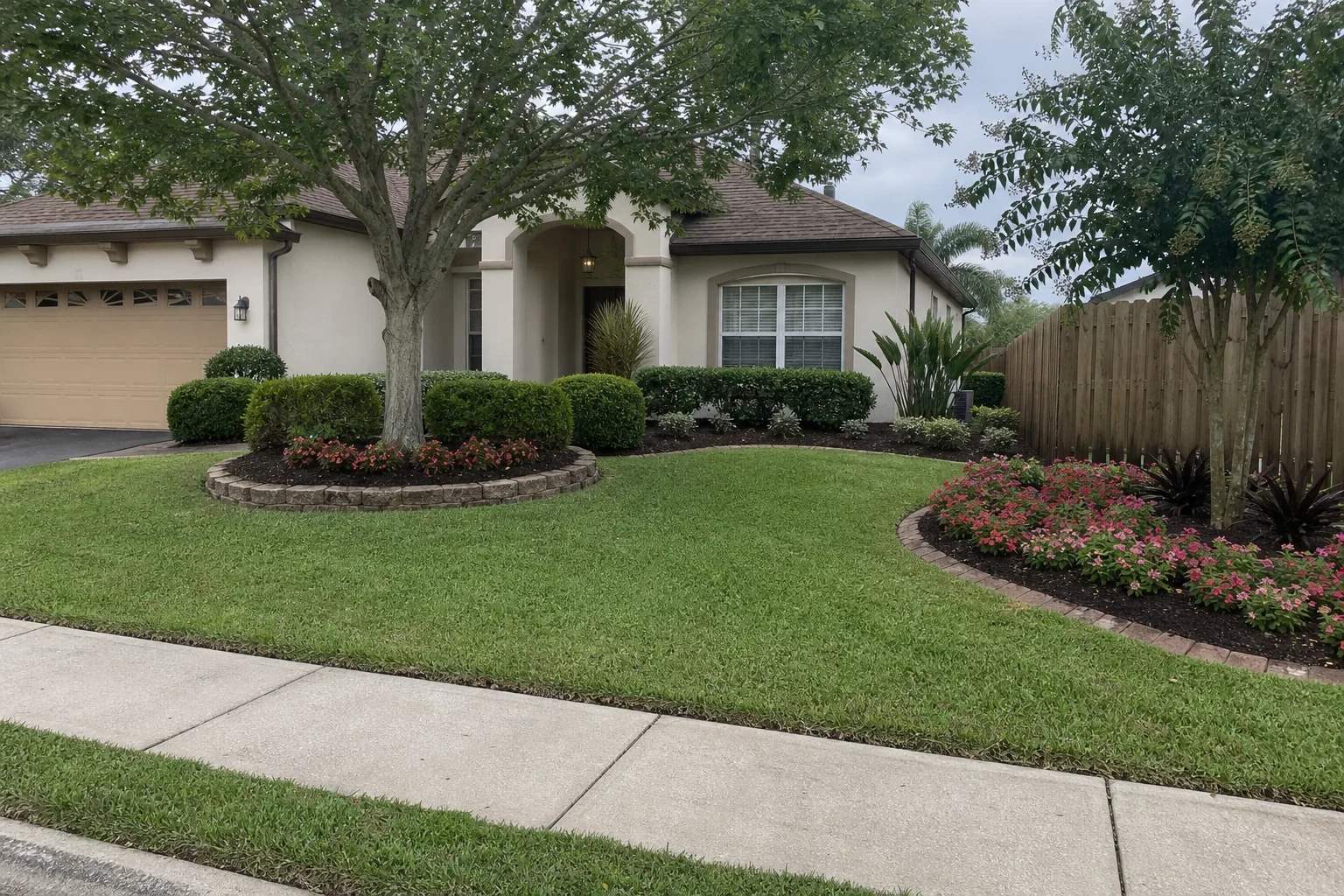
We'll walk your property, identify each palm and tell you which need pruning, which need removal and which should be left alone. The estimate is free and includes a clear answer on what city and HOA approvals apply.