ServicesHardscape Installation
Hardscape Installation in Lake Buena Vista
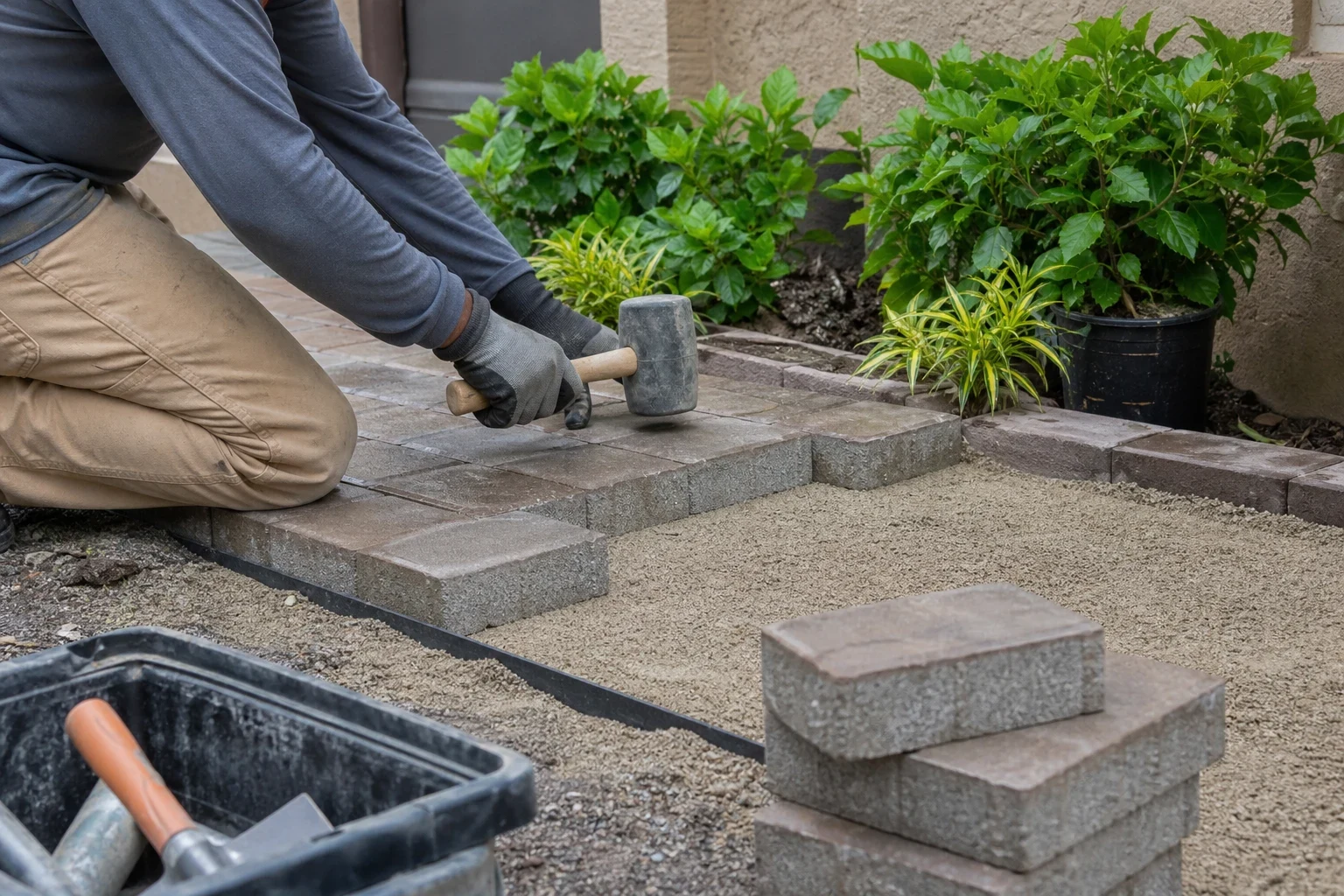
We build paver patios, walkways, driveway extensions and retaining walls that stay flat and drain the right way. We dig out the soft soil, compact a real base, set edge restraint and handle the permit and HOA paperwork before the first paver goes down.
What hardscape installation covers
Hardscape is the built part of your yard: pavers, natural stone, concrete edging, segmental retaining walls, steps and borders. Most failures we get called to fix trace back to what is under the surface, not the stone. A patio laid on a thin layer of sand over loose topsoil will rut, sink at the edges and grow weeds in the joints within a few rainy seasons.
Central Florida's sandy soil drains fast but shifts easily, and summer storms can drop inches of water in an hour. That is why we grade every surface to shed water away from your home's foundation and plan where the runoff goes before we dig.
Some hardscape work needs a permit or HOA sign-off, and some does not. We check that for your address at the start, tell you plainly what applies and why, and file what is needed so the finished work does not cause trouble when you refinance or sell.
What the work includes
- Paver patios and pool surrounds
- Concrete or travertine pavers set on a compacted aggregate base and a screeded bedding sand layer. Joints are filled with polymeric sand, which hardens when wetted and resists washout and ants.
- Walkways and driveway extensions
- Walkways are built for foot traffic. Driveway sections get a deeper base and a thicker paver rated for vehicle loads, because a patio-grade build will crack and settle under a car.
- Segmental retaining walls
- Interlocking block walls with a buried base course, gravel backfill and a perforated drain pipe behind the wall. Water pressure behind a wall, not the weight of the soil alone, is what pushes most failed walls over. Taller walls may need engineering and building department review, and we tell you where that line falls before design.
- Edging, borders and steps
- Concrete curbing, paver soldier courses and stone borders that separate turf from beds. Steps are sized to consistent riser heights so nobody trips on an uneven one.
- Grading and drainage
- We set slope on every surface and can add channel drains or pop-up emitters where water would otherwise pool against your home or a wall.
Signs it is time for new hardscape
Pavers sinking or rocking
Low spots and loose pavers mean the base has settled or washed out. Resetting the top layer will not last; the base underneath has to be rebuilt.
Water pooling after storms
Standing water on a patio or against your home's slab means the surface was graded flat or backward. That water can reach the foundation or feed mold on the pavers.
A leaning or bulging wall
A retaining wall that tilts or bows usually has no drainage behind it. It tends to get worse with every rainy season.
Weeds and ant hills in the joints
Plain sand joints wash out and leave room for weeds and fire ants. Regrouting with polymeric sand helps, but heavy gaps often point to a base problem.
Bare, worn paths through the lawn
If everyone cuts the same line across the grass, a walkway solves it for good and saves you from reseeding or patching sod every year.
How a hardscape job runs
- 1
Walkthrough and measurements
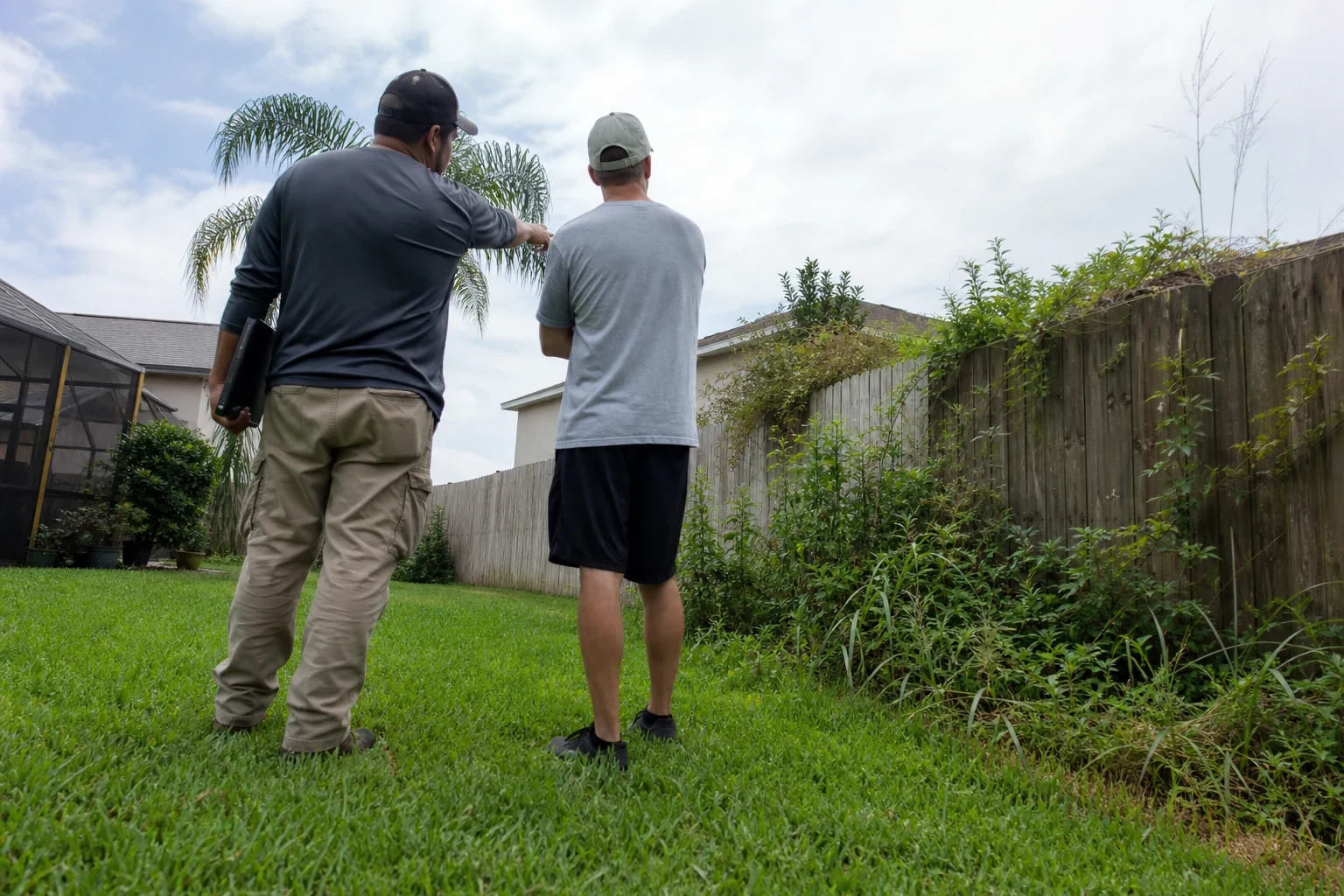
We walk the area with you, check slope, note utilities, trees and irrigation lines, and talk through materials. You get a free estimate with the base depth and materials written out.
- 2
Permits and approvals
We confirm whether your project needs building department review, HOA architectural approval or both. We prepare the drawings and paperwork, and schedule nothing until approvals are in hand.
- 3
Excavation and base
We call in a utility locate, then dig out sod and soft soil to the depth the job needs. Crushed aggregate goes down in lifts, each one compacted with a plate compactor so the base does not settle later.
- 4
Setting and finishing
We screed the bedding sand, lay the pattern, cut the edges, install edge restraint and compact the pavers into the sand. Polymeric sand is swept in and misted to set.
- 5
Inspection and cleanup
If the job was permitted, we meet the inspector on site. We repair any irrigation heads we moved, haul away excavated soil and debris, and walk the finished work with you.
What moves the cost of hardscape
Hardscape is priced by the square foot or linear foot, but the number depends far more on what happens below grade than on the paver you pick. Your estimate lists each part separately so you can see where the money goes. If you would rather spread out the cost of a bigger build, we offer financing of up to $100,000, with terms anywhere from 2 to 12 years and no penalty if you pay it off early.
- Size and shape
- Square footage drives base material and labor. Curves and patterns like herringbone add cutting time and waste.
- Material choice
- Standard concrete pavers, travertine, natural stone and wall block vary widely in price and in how they handle heat and pool water.
- Excavation and base depth
- Driveways and soft or fill soils need a deeper base. Removing old concrete or failed pavers adds demolition and haul-off.
- Access
- Narrow side yards or fenced backyards mean smaller equipment and more hand work.
- Approvals, engineering and drainage
- Review fees, engineered wall designs and added drains apply only where the site calls for them, and we explain each one before you approve.
Hardscape questions we hear often
Something not covered here? (407) 584-3857
Do I need a permit for a paver patio?
It depends on the project and your address. A simple ground-level patio often needs no building permit, while driveway changes, taller retaining walls and work near a pool can need review. Most HOAs require architectural approval regardless. We check both before design and handle the filing.
Why not just pour concrete instead?
Poured slabs crack as soil moves, and a cracked slab is hard to repair cleanly. Pavers flex with small movement, and if a section settles or a pipe underneath needs work, we can lift and reset those pavers instead of cutting the whole surface.
How long does a typical patio take?
Most residential patios and walkways take a few working days once approvals are in. Rain can pause work, because we do not compact a saturated base. HOA and building review time comes before that and varies.
Will the work damage my sprinkler system?
We mark irrigation lines and heads at the walkthrough and reroute or cap them as needed. If you want zones adjusted for new beds around the patio, our irrigation work can be folded into the same project.
Do pavers get too hot by a pool?
Dark concrete pavers can get hot in full sun. Light-colored pavers and travertine stay noticeably cooler underfoot, and we will show you samples so you can compare them before you choose.
Plan your patio or wall with a free walkthrough
We will look at the slope, the soil and the approvals your project needs, then put the whole plan in writing. You will know what is required before any digging starts.